

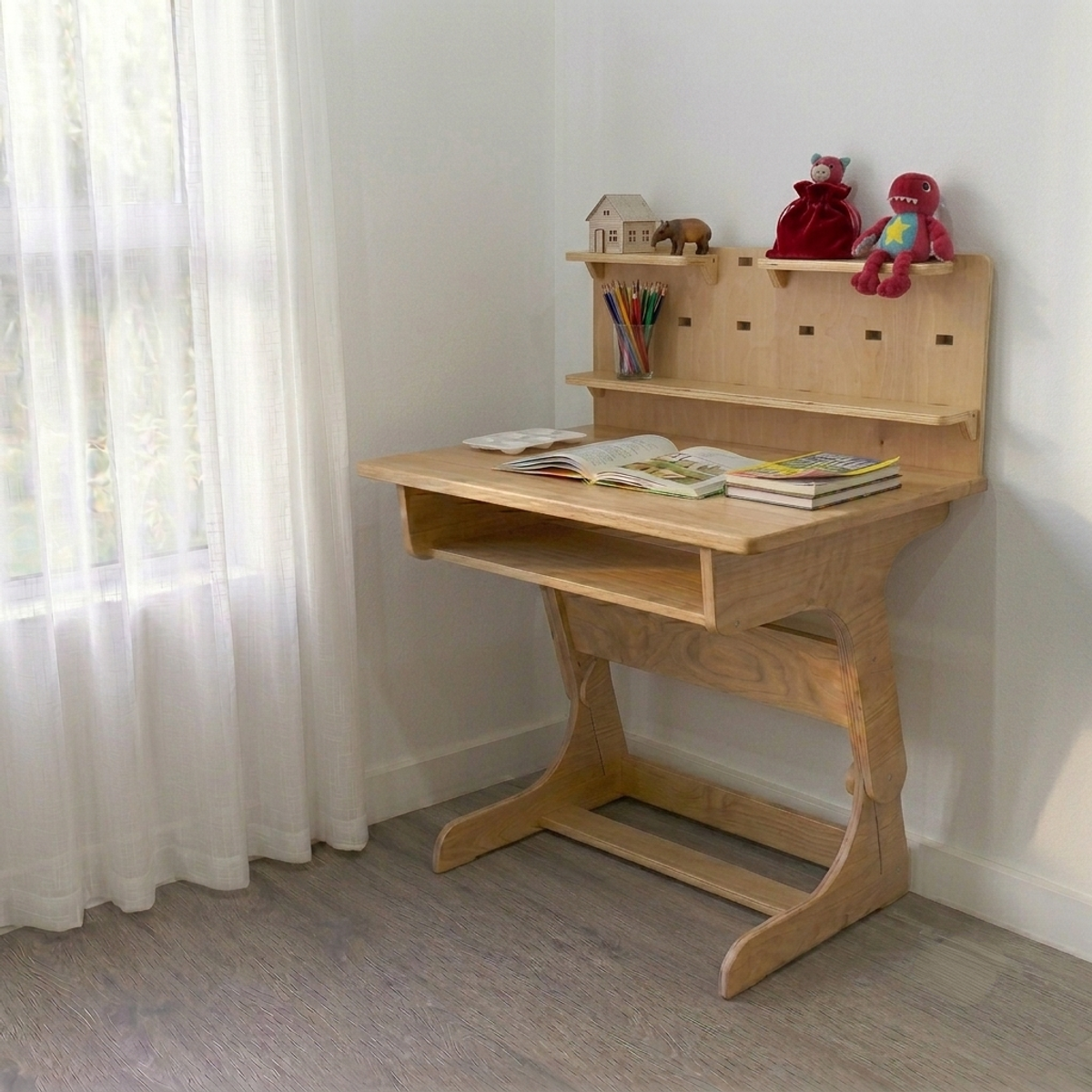
There is no specific age when every child needs their own study table.
For some children, a small table and chair can be useful from the toddler years for drawing, reading, puzzles and everyday activities. For others, a dedicated study desk may only become necessary when they start preschool or primary school.
What matters more than age is whether the furniture is suitable for your child's size, stage of development and activities.
A child's workspace can also change as they grow. What starts as a small table for drawing and play can eventually become a proper study desk for homework, reading and creative projects.
Does a Toddler Need Their Own Table?
Not necessarily, but a child-sized table can be very useful during the toddler years.
At this stage, children are becoming more independent and want to do things by themselves. Having a table and chair that are made for their size gives them a comfortable place to sit and participate in everyday activities.
It could be used for:
- Drawing and colouring
- Looking at books
- Simple puzzles
- Building blocks
- Crafts and sensory activities
- Having snacks or meals
It doesn't need to be a “study table” yet. The goal is simply to give your child a space that they can comfortably use on their own.
Starting With a Weaning Table & Chair
For younger children, a weaning table and chair set can be a practical starting point.
The Unicraft & Decor Weaning Table & Chair Set has three adjustable levels, allowing the furniture to be adjusted as your child grows.
At this stage, the table can be used for meals, drawing, reading and other everyday activities. It gives children a space that is accessible to them without needing to use adult-sized furniture.
What About Preschoolers?
Once children start preschool, their activities often become more structured. They may spend more time drawing, writing, reading, doing crafts and completing simple learning activities.
This is when having a consistent workspace can become more useful.
A small table in the bedroom, playroom or a quiet corner of the home can give your child a familiar place for these activities.
It doesn't need to be elaborate. A comfortable, appropriately sized table and chair are often all they need.
When Does a Child Need a Proper Study Desk?
A proper study desk generally becomes more useful once a child starts primary school.
As schoolwork increases, they may need space for:
- Homework and worksheets
- Books and stationery
- Reading and writing
- School projects
- A laptop or other learning devices
At this stage, a larger and more versatile desk can be more practical than a small activity table.
However, don't choose a desk based on age alone. Your child's height, activities and available space at home should also be considered.
Why Does Table and Chair Size Matter?
Children are not simply smaller versions of adults, so adult-sized furniture may not be the most comfortable option for them.
A table that is too high can make it difficult for a child to work comfortably, while a chair that is too high may leave their feet unsupported.
Ideally, when sitting at their table:
- Their feet should have proper support.
- Their knees should be comfortably positioned.
- Their arms should rest naturally on the table.
- Their shoulders should remain relaxed.
- They should be able to sit comfortably without constantly adjusting their position.
This becomes particularly important when children start spending longer periods reading, writing and doing schoolwork.
How Do You Know If Your Child Is Ready for Their Own Workspace?
Age is only one indication. Your child's behaviour may be a better guide.
They may be ready for their own workspace if they:
- Enjoy drawing, colouring or writing
- Frequently look at books
- Enjoy puzzles, crafts or building activities
- Have started bringing home preschool or school activities
- Regularly need a place to work on projects
- Ask for a table or space of their own
- Find it difficult to work comfortably at the dining table
Your child's first workspace doesn't have to be a formal study desk. A small, child-friendly table can be enough for many years of early learning and creative activities.
Does the Study Table Need to Be in the Bedroom?
No.
A child's workspace can be placed wherever it works best for your home.
For younger children, a table in the living room or playroom may work well because they can remain close to the family. Older children may prefer a quieter space in their bedroom when they need more concentration for homework.
There is no single correct location. What matters is having a comfortable space with enough room for the activities your child enjoys.
Should You Buy a Desk That Grows With Your Child?
It can be tempting to buy a large study desk and expect your child to grow into it. However, furniture should still be comfortable and practical for their current size.
Instead, think of your child's workspace as something that can evolve over time.
They might start with a small table and chair for everyday activities, move to a more versatile desk during their school years, and eventually use a larger workspace throughout their teenage years and into adulthood.
At Unicraft & Decor, for example, a child's furniture journey can start with a Weaning Table & Chair Set during the early years and eventually progress to a more versatile desk such as the ShiftDesk as their learning and workspace needs change.
The goal isn't to give a child a “study desk” as early as possible. It is to give them a workspace that is appropriate for their age, comfortable for their size and useful for what they are actually doing.
So, What Age Should a Child Have Their Own Study Table?
There is no magic number.
Toddlers: A small table and chair can be useful for meals, drawing, books, puzzles and independent activities.
Preschoolers: A dedicated child-sized workspace can support drawing, crafts, early writing and other learning activities.
Primary school children: A proper study desk becomes increasingly useful as homework and schoolwork increase.
Teenagers: A larger, versatile workspace can accommodate more demanding schoolwork, technology, hobbies and projects.
The best time to introduce a table or desk is when your child has a genuine need for a workspace - and the furniture should match their stage of development.
Starting with furniture that suits their current needs and gradually moving to more versatile pieces can be a practical way to create a workspace that grows alongside your child.
Frequently Asked Questions
What age should a child have their own study table?
There is no fixed age. A child-sized table can be useful from the toddler years for everyday activities, while a dedicated study desk generally becomes more useful once children start preschool or primary school.
Does a 2-year-old need a study table?
Not necessarily, but a small table and chair can be useful for drawing, reading, puzzles, snacks and other independent activities.
What should I look for in a children's study table?
Choose a table and chair that are appropriately sized for your child. Their feet should have proper support, and their arms should be able to rest comfortably on the table.
When should I buy my child a proper study desk?
A proper study desk often becomes more useful when children start primary school and have more homework, books and school materials.


