

Why Free Play Matters More Than Ever
In today’s world of classes, screens, and structured routines, children rarely get the chance to simply play. Free play may look “simple”, but it’s actually one of the strongest foundations for creativity, confidence, and problem-solving.
When children get to explore on their own terms, they learn to think independently, communicate better, and manage their emotions. This kind of open-ended play is especially important for toddlers and preschoolers in Malaysia and Singapore, where early childhood learning has become more fast-paced.
How Open-Ended Toys Support Free Play
Open-ended toys - especially those inspired by Waldorf and Montessori - give children space to imagine and create without fixed rules. Instead of telling them what something is, these toys allow kids to decide on their own.
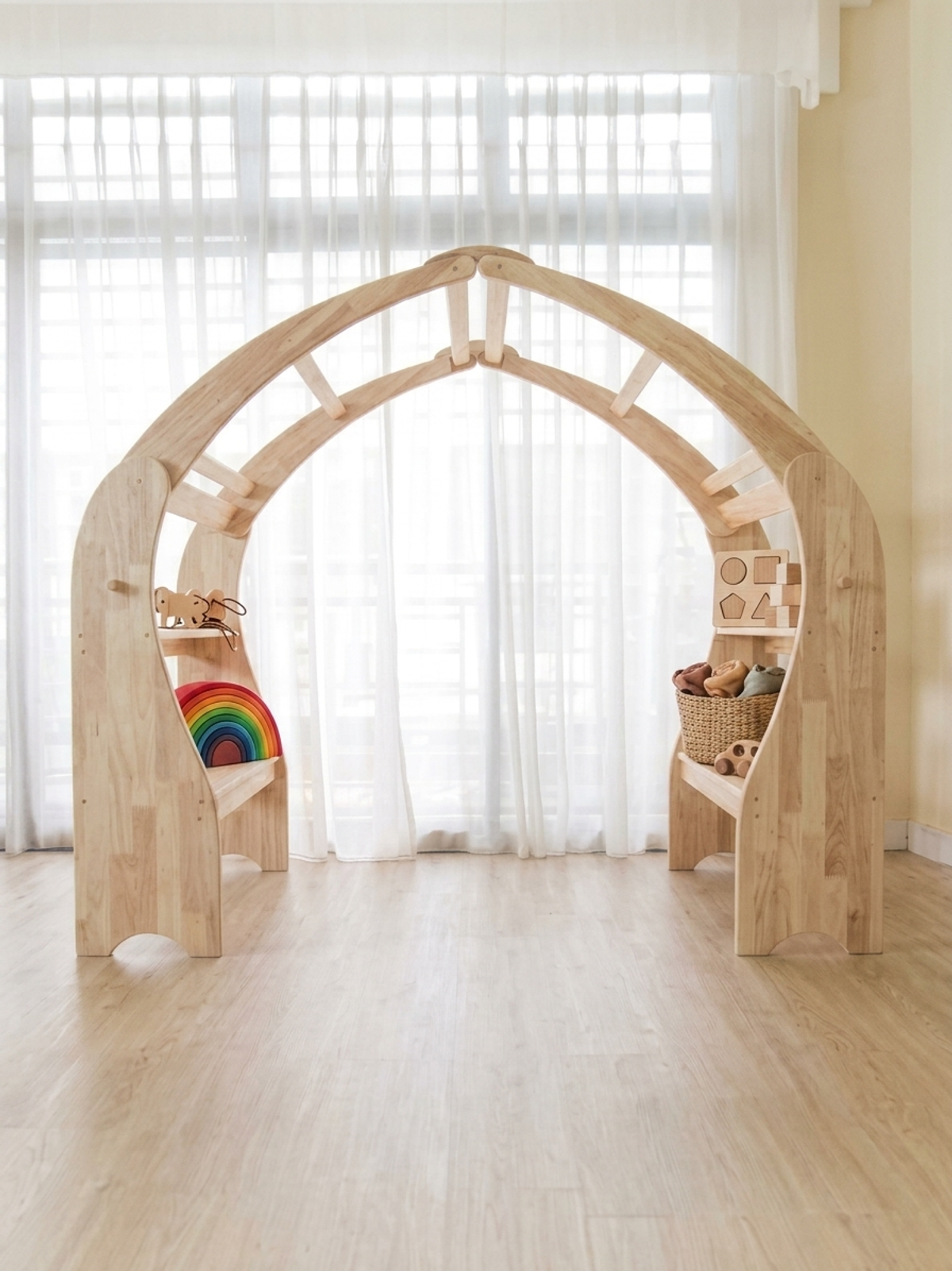
One of the best examples is our MORI Waldorf Playstand, handcrafted from solid rubberwood in our JB workshop. It’s a simple structure, but children instantly turn it into:
- A mini supermarket
- A theatre stage
- A cosy reading tent
- A treehouse
- A secret hideout with just a draped cloth
Because there’s no single “right” way to play, children naturally stretch their creativity and storytelling skills.
Explore the MORI playstand here: https://www.unicraftdecor.com/products/waldorf-playstand
A Small Step That Creates Big Imagination
Parents don’t need to overhaul their whole home to encourage free play. Just one thoughtfully designed play element can open up hours of independent, imaginative fun.
Whether you’re creating a simple play corner or building a full playroom, open-ended pieces like a Waldorf playstand grow with your child - evolving from pretend play to craft nook and even storage.


