

A Simple Guide for Parents Choosing Kids’ Furniture
When shopping for kids’ furniture, you’ll often see three common materials: particle board, plywood, and solid wood. Each has different strengths, durability levels, and price points. This short guide explains the differences so you can choose what suits your home and expectations.
1. Particle Board
Particle board is made from wood chips and sawdust compressed together with resin.
It is the most affordable option and commonly used in budget furniture.
Pros:
- Budget-friendly
- Smooth surface for laminates and colours
Limitations:
- Least durable among the three
- Weak against moisture
- Screws loosen more easily over time
- Not suitable for heavy load or long-term use
Particle board works for temporary or light-use furniture, but not ideal for items your child will climb, pull, and use daily.
2. Plywood
Plywood is made by layering thin sheets of wood (ply) with alternating grain directions. This structure gives it strength in all directions.
Pros:
- Strong and stable
- Great strength-to-weight ratio
- Durable for long-term use
Considerations:
- Can flex slightly if the panel is long and narrow
- Some parents prefer “natural solid wood” over engineered wood, even though plywood is very strong
Plywood is a popular choice for children’s shelves, beds, and play furniture because of its consistency and reliability.
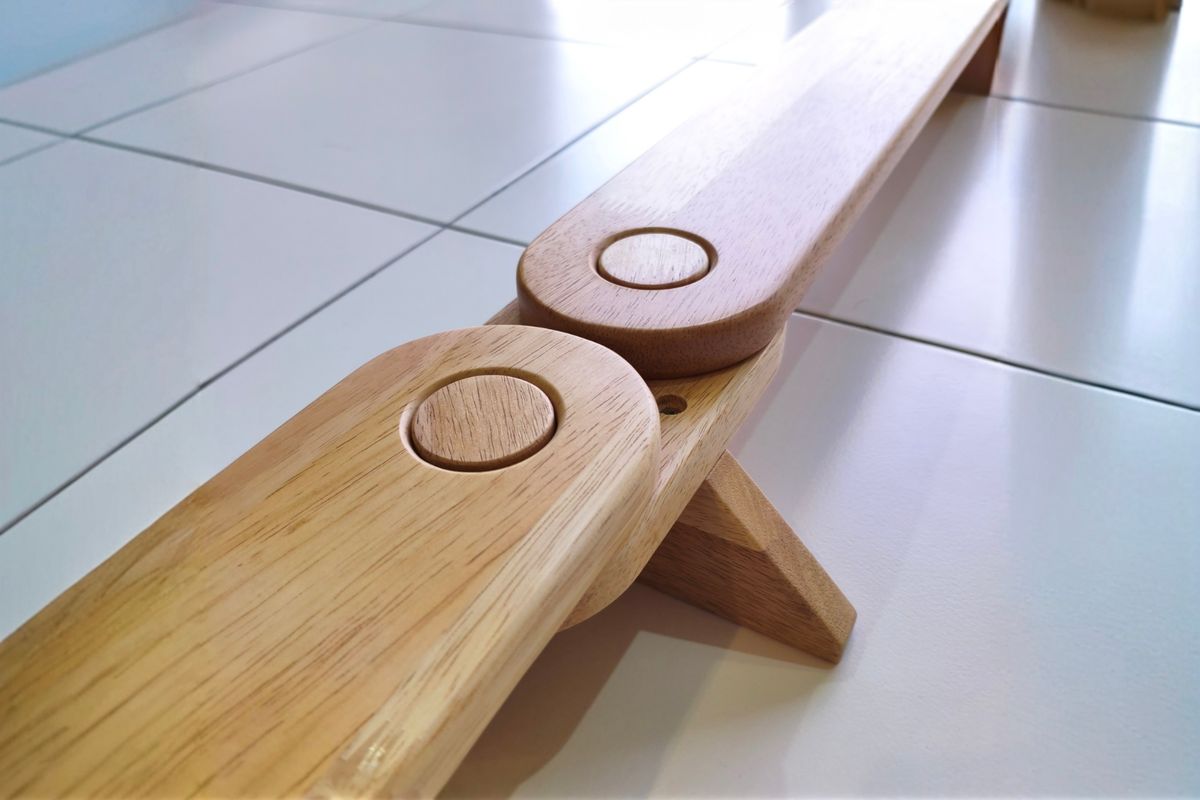
3. Solid wood (Unicraft & Decor uses solid rubberwood)
Solid rubberwood comes from matured rubber trees that have finished producing sap. The wood is sliced, carefully selected, and joined to form stable boards.
Pros:
- True solid wood with natural beauty
- Very strong along the grain
- Long lifespan and repairable
- Premium look and feel
Considerations:
- Strongest along the grain but less strong across the grain, our design will take into account this aspect
- Natural wood moves slightly with humidity
- Higher price due to material and craftsmanship
Solid rubberwood offers a warm, premium, long-lasting feel that many parents love for children’s room furniture.
Conclusion:
All three materials have their purpose, but for children's furniture where safety, stability and long term value matter - plywood and solid rubberwood stand out stronger, and are more durable options compared to particle board.


