

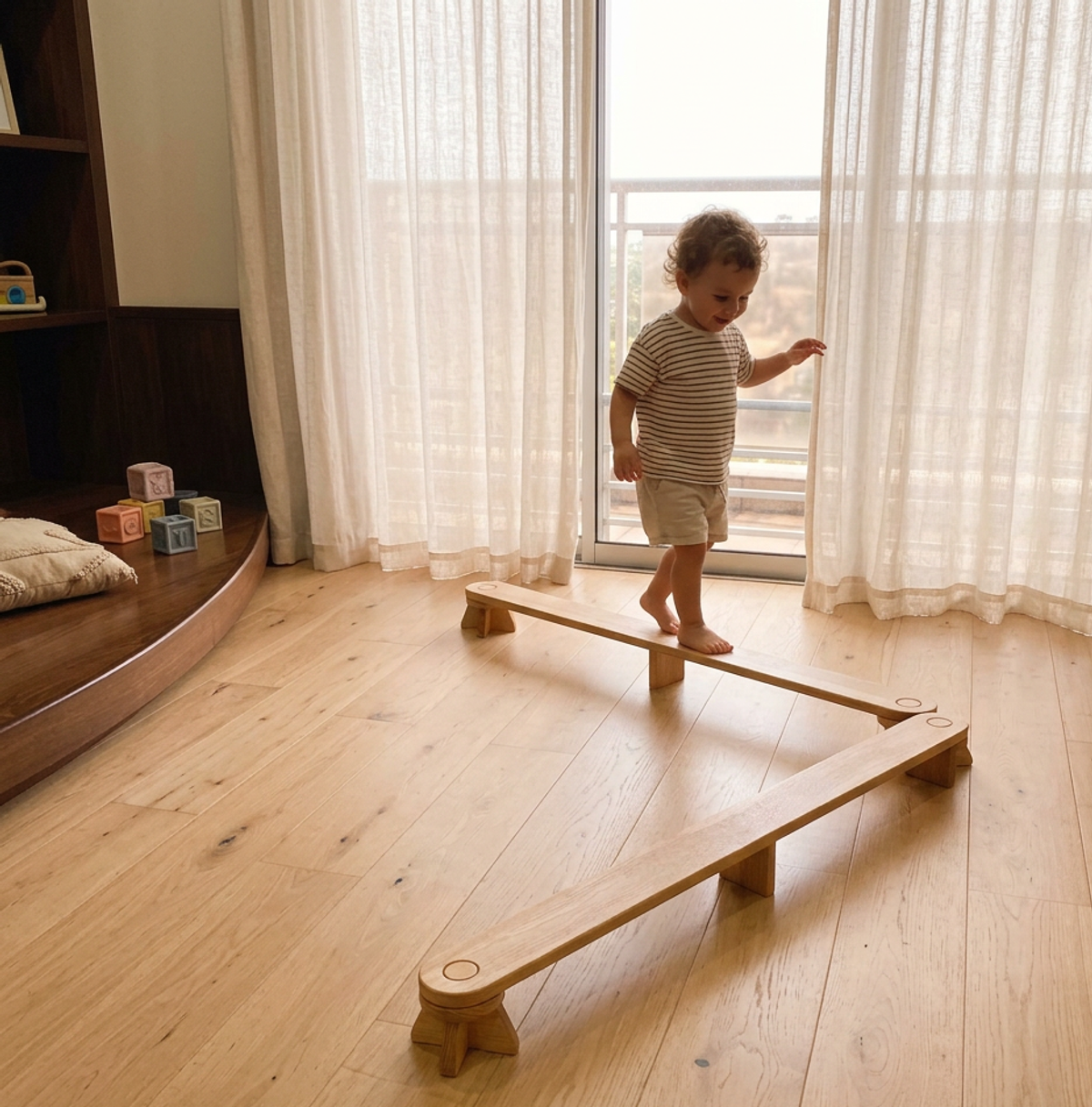
Why Play Matters: The Foundation of Toddler Growth
Play is more than entertainment — it is the core of how toddlers learn. Through play, young children develop physical strength, communication skills, emotional resilience, and the confidence to explore their surroundings. When parents understand the value of play, they can better support a child’s natural growth.
Play Builds a Toddler’s Physical and Motor Skills
Active play helps toddlers strengthen their muscles, improve balance, and develop coordination. Simple actions like crawling, climbing, pulling, pushing, and stacking teach them how their bodies move.
This physical development becomes the building block for future milestones such as running, jumping, and writing
Play Supports Cognitive Growth and Problem-Solving
When toddlers manipulate objects, experiment with actions, or try new play setups, they are practicing early problem-solving. They learn cause and effect, test ideas, and make decisions.
These small “experiments” during play shape the way they understand the world.
Play Encourages Communication and Social Skills
Whether a toddler is playing alone, alongside another child, or interacting with adults, play teaches them to express themselves. They practice gestures, sounds, words, and turn-taking — skills that will be crucial when they enter preschool.
Play Helps Toddlers Understand Their Emotions
Play gives children a safe space to express excitement, frustration, joy, or hesitation. It teaches them how to self-regulate and feel safe trying new activities. This supports long-term emotional resilience.


